s

p

Forensic Science Resources for teachers and students


My wife is teaching Forensic Science this year so I was helping her find some resources for the class. I decided to share the resources here.

NCIS - another great show to get students interested in science
http://educationaltechnologyguy.blogspot.com/2011/11/ncis-another-great-show-to-get-students.html

Great listing of resources and sites. 

http://shs2.westport.k12.ct.us/forensics/ - high school forensics class site

http://bsapp.com/forensics_illustrated/ High School Forensic Science curriculum and resources

http://www.forensicpage.com/new09.htm Forensic Science for high school students.

http://nrhs.nred.org/www/nred_nrhs/site/hosting/Rubins/main%20page.htm - New Rochelle High School Forensic Science Page. 

http://www.nclark.net/ForensicChem Forensics Science labs and activities.

http://sciencespot.net/Pages/classforscilsn.html - great resources for all sciences too. Lesson Plan links.


Interactive Games, including forensics (from FreeTech4TEachers) http://www.freetech4teachers.com/2012/12/16-fun-interactive-games-about-nature.html


CSI: The Experience Web Adventures (great site!)


PBS KIDS' Design Squad Nation - great STEM resources and lessons


PBS KIDS' Design Squad Nation is an Emmy Award winning program with STEM related videos, activities, games and an interactive community. There is also a Parents and Educators section with lesson plans, curriculum guides, and more. 

There are some great new features to it, including a Solar System unit with games, activities, and lesson resources about our solar system, a roller coaster project where students compete to build the best roller coaster out of poster board, and a variety of other resources. 

Topics include science, flying, hobbies, sports, and much more. 

This is a great, free resource for educators, parents and students and well worth the time to explore it. 


How To Smile - collection of math and science resources


How To Smile is a collection of math and science resources for teachers and students. There are activities that help teachers connect science and math to pretty much anything, including things in the students' homes.

The site is hosted by a group of science museums and collects STEM education materials from the web, as well as from educators.

The site is searchable, has tons of activities organized by topic and searchable, comments and sharing, and much more. There is a newsletter to keep up to date on changes to the site, as well as a mobile app.


There are some really great activities that can help students learn and explore topics in science and math.


What Engineering, the E in STEM, means to K-12 education


STEM (Science, Technology, Engineering, and Math) is a term used to describe having these four topics integrated into K-12 education. It is an important topic and integrating STEM topics into any class can help students learn and explore. However, many educators aren't sure what this means or how to incorporate STEM topics into their classrooms, especially the "engineering" part.

The Opportunity Equation has a great article, "The “E” in STEM: Clarifying What Engineering Education Means for K-12". This article helps to explain what engineering would look like in K-12 education. Engineering and education experts shared their thoughts about the following questions:  What is engineering and what are the essential components that you feel ought to be included in K-12 education? What is the value of engineering education at the K-12 level? What are some examples of promising practices in K-12 engineering education?

This is a great resource to help explain the concept of engineering in K-12 education and how to implement it.

As a former engineer, I use engineering concepts in my classes on a regular basis and I see how it helps my students. I also use engineering concepts in my daily life, showing how important and useful this topic is to anyone.


Related:

STEM Resources for Education


Free Online Science Journal from US Forest Service


The US Forest Service has a very cool site called the Investi-gator, that is an upper elementary school science education journal. There are articles on leaves and why they change colors, ozone, soil activity, and much more, with discussion questions, interviews with scientists, lesson plans and assessments to use with students. You can download the journal issues, view them online, or order free copies for your classroom.


This is another great educational resource for teachers. http://www.scienceinvestigator.org/


Science Niblets - The Science Behind Everyday Topics


Science Niblets is a cool site I learned about from my PLN on Twitter today that explores the science of everyday topics.

The site has articles that describe and explain scientific topics including natural phenomena, biology, technology, physics, and more all related to things we experience in our daily lives.

The articles are geared towards the general public and are short and easy to understand. They provide a great way for students to learn more about science topics and can be useful for beginning learners, ESL/ELL, and even for advanced science students to learn something new. You can search the site by topic too.

You can also ask science questions on the site and they will post an answer, as well as reader answers. There is even a section on teaching reading using science. There are also recommendations and reviews of science books and educational toys.

I'm going to use it as a starting point for some of my lessons, as well as ideas for relating topics to everyday life.

Take a look and share it with your students and colleagues.


Related:

Head Rush - fun science show from Discovery with great website
STEM Resource for Educators - lots of great science, technology, engineering and math resources


EngineerGuy - great videos and resources on how things work


EngineerGuy is a very cool site by Bill Hammack. He explores and explains technology and the human side of technology, in videos and radio pieces, along with some books.

He teaches at the University of Illinois, was a US Diplomat (Senior Science Adviser at the Department of State), and has received awards for his work.

The videos and radio shows have explored nanotechnology, smart phones, mood rings, new inventions, light bulbs, smoke detectors, the accelerometer in a smart phone and much more. The videos are well done, explain the technology in an easy to understand way, and are very interesting.


The videos are a great way to learn about technology and different topics, as well as to share with your students. The videos can be viewed on his site (they are hosted on YouTube) and you can also listen to his radio shows and read different white papers he has written.

I will be using some of the videos as introductions to topics or to get my students engaged and excited about some topics.


Check it out: http://www.engineerguy.com/


More great STEM Resources.


Google Earth Day - resources to celebrate Earth Day, Everyday


Earth Day was this past Sunday, April 22nd, but we shouldn't just do things to help our planet one day out of the year.

Google Earth Day is a great site that has some great resources to help anyone celebrate Earth Day, Everyday.

The site has information on starting your own garden, finding discount seeds, connecting with other gardeners, gardening tips, recipes, helping find a community garden, and much more.


http://www.google.com/campaigns/plantforearthday/


Related:

Earth Day Resources for Educators

Google Resources for Education - tips, resources, links, help, how-to's, apps, lesson ideas, and more.


Earth Day is April 22 - here are some great resources for educators


Earth Day, April 22nd, is a great time to talk to your students about the environment. Many schools, including most in Connecticut, will be on break during that time, but you can always talk about it after break.


Earth Day was started in 1962 as a way to bring attention to environmental issues. As polution increases, and the environment is continually affected by humans, it is a great time to get our students thinking about environmental issues. 


Here are some resources you can use with your students:


National Environmental Education Week 2010
National Environmental Education Week - This week (April 10-16) is Environmental Education Week. This site has an entire section with resources for educators that includes curricula, quizzes, professional development and more. 


Home
Earth Day Network - this is another great resource for teaching about the environment and Earth Day. The educator resource page has lesson plans, Green your School guide, grant programs and more to help educators. 


Science Museum Climate Science Info Zone - information and resources on climate change, carbon footprint, and more. 


Think Green from Discovery Education - Think Green is another great free resource from Discovery Education that contains lesson plans, videos, and activities for teachers to use in their classroom. The resources are sorted by grade level and are interactive and educational. 


You can also go to the Think Green Resource Page to search for more resources by grade, topic, or resource. 


Discovery Education, Siemens STEM Academy also has some great resources. 


Every classroom can, and should, talk about Earth Day and the environment. We all need to help make sure that the Earth will be a healthy, viable, place for generations to come. It's also a great way to incorporate STEM topics into any classroom and relate STEM topics to the environment. 


English classes could write about the environment, including persuasive essays and letters on different topics. 


History classes could look at the history of Earth Day and the Environmentalist movement, along with the history of different environment events. 


Science classes can delve into the science of the environment, energy resources, energy production and more. 


What do you do for Earth Day in your classroom?


Some More Environmental Resources


Discovery Education Dawn Junior Wildlife Champions-free lesson plans about oil spills and wildlife

The Road Ahead - resources on electricity generation from Discovery Education

Discovery Education Turfmutt - environmental science lessons

25 Free Resources from Discovery Education

Discovery News - science news

Disney Planet Challenge - project based environmental contest with resources


My GCSE Science - science resources for teachers and students

My GCSE Science is a site that has video lessons and resources on Biology, Chemistry and Physics. They were developed for a specific curriculum and program, but can be used by anyone for these topics.

The videos are good and there are notes pages that go with them. The notes pages have images from the video along with space to write your own notes. The video listing has the length of the video also.

They are organized by subject and topic and the videos are hosted on YouTube.

This is good for students to use for review, missed work, and help, and for teachers to use in class or for absent students.

Here's some of the Chemistry and Physics videos. Click on the video or "Learn" to get to the video. "Notes" brings you to the PDF notes for the video.


Notes page example:


Whatchamacology - cool app to learn scientific terms


Whatchamacology is a cool app for iPhone and Android that helps students learn scientific terms through games and analogies. The terminology is from the grade 9-12 Ontario Science Curriculum. You can also submit your own terms and clues to share.

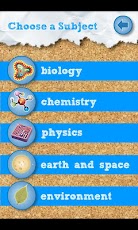
Terms are from Biology, Chemistry, Physics, Earth and Space Science and Environmental Science. Games include password, pictionary and more.

This is a fun way for students to learn scientific terms in a way that will help them remember them, and be able to figure out other scientific terms.

It's $0.99 for either version.